
Through the 2026 Kosabangsa programme, the women farmers of Sanggra Agung learned to turn ginger, turmeric, temulawak, and kencur into higher-value products.
Pharmacy lecturers from Universitas Noor Huda Mustofa (UNHM) and UPN Veteran Jawa Timur held a training on diversifying biopharmaceutical products for the women farmers’ group (KWT) of Sanggra Agung village, Socah, Bangkalan.
The training is part of the 2026 Kosabangsa programme (Social Collaboration to Build Communities), funded by the Ministry of Higher Education, Science, and Technology. It aims to strengthen women farmers and the local community through herbal and traditional health products.
The team partnered with the Bangkalan Agriculture, Fisheries, and Food Security Office as the government partner, and with MPStore as the industry partner for digital marketing and e-commerce.
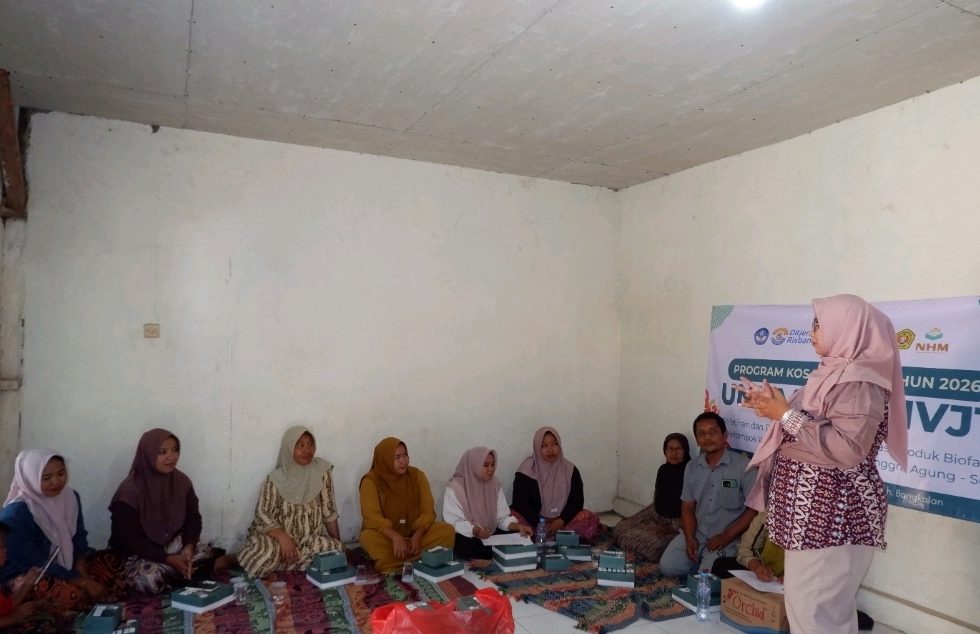
Devi Anggraini Putri, M.Si. training the women farmers of Sanggra Agung.
“Science and technology must be passed on to the community and combined with scientists from many fields, government, and industry, so that they make the greatest possible impact for Bangkalan and Indonesia.” — Devi Anggraini Putri, M.Si., Kosabangsa team lead
How Sanggradaya began
Devi reminded the farmers that impact is not only what a programme produces, but what lasts after it ends. To make the collaboration last, the team set up Sanggradaya as an incubator in Sanggra Agung.
The hope is for Sanggra Agung to become a sustainable local biopharmaceutical business centre. The name joins “Sanggra”, from the village name, with “Daya”, a village community that is empowered and rooted in its culture.
From raw material to a range of products
The session opened with the most sought-after rhizomes: ginger, turmeric, Java ginger (temulawak), and kencur. Participants then learned how to standardise raw material: washing, drying, slicing, sorting, and storage.
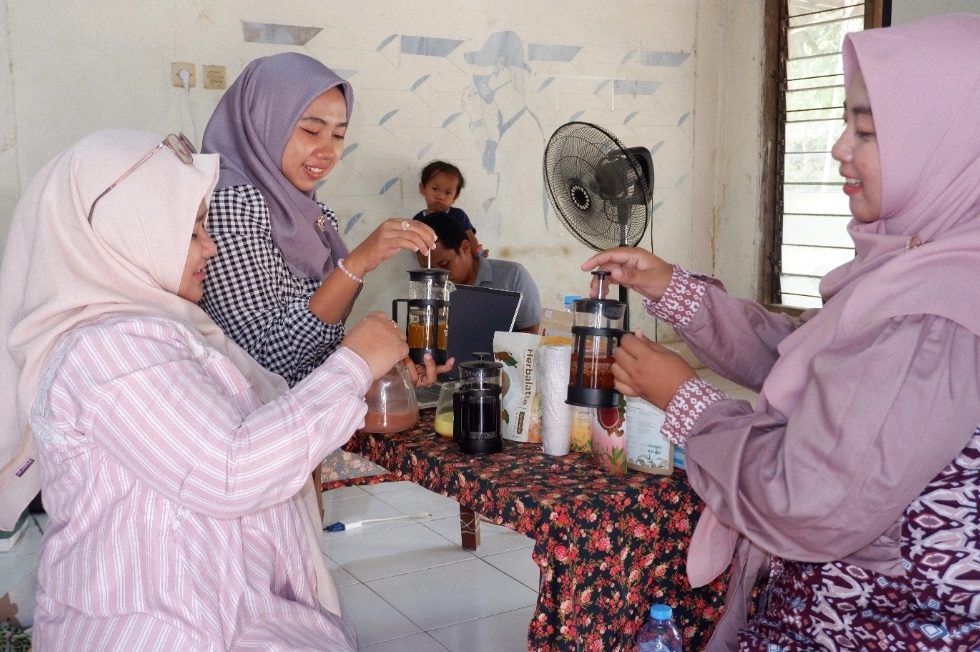
The lecturers demonstrating biopharmaceutical product variations.
In the demo, Devi, Rizka Efi Mawli, M.Si., and Rulisiana Widodo, M.Tr.Kom. showed drinks, instant powders, tisanes, herbal lattes, and herbal cookies. Participants learned each product’s critical points, such as bottling drinks while warm and storing them cold.
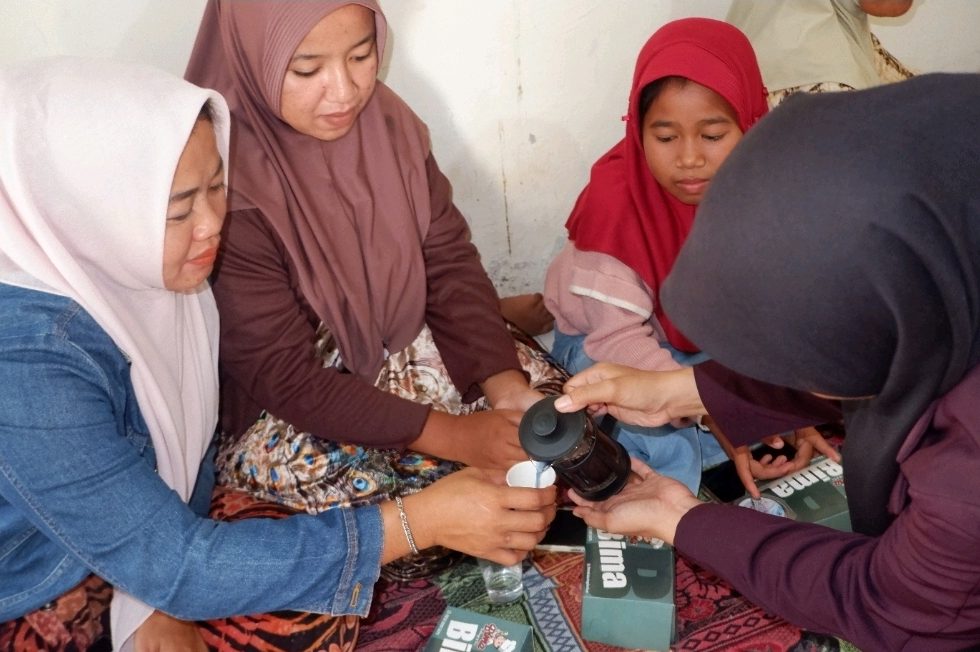
Participants checking each preparation and running simple sensory tests.
The training also covered batch quality checks, labelling rules for processed food, and the SPP-IRT home-industry permit. On the business side, participants practised costing each pack, adding a margin, and comparing it with market prices.
“This activity is very useful in supporting and raising the selling value of Bangkalan farmers’ produce.” — Samhori, head of the Sumur Agung farmer group
Next steps
Participants will now run trial batches in the group kitchen, choose one lead product, apply for SPP-IRT through the local health office, and sell in small quantities while gathering feedback.
The team is also building a Hybrid Solar House Dryer in Sanggra Agung: a spice dryer with hybrid heating and Internet of Things (IoT) monitoring, so farmers can produce standardised raw material.
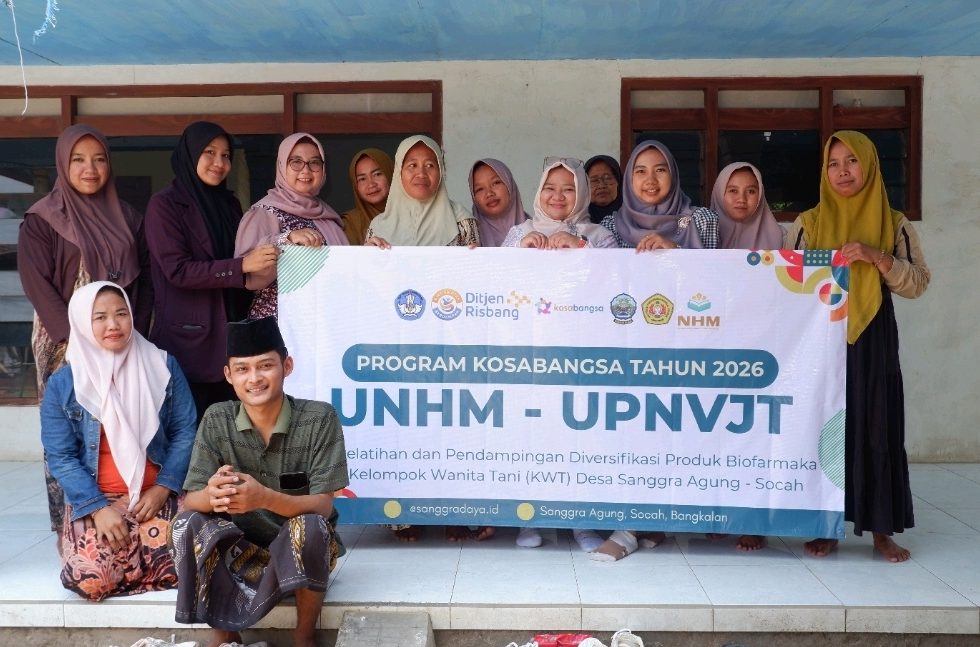
The UNHM and UPN Veteran Jawa Timur team with the farmers of Sanggra Agung.